



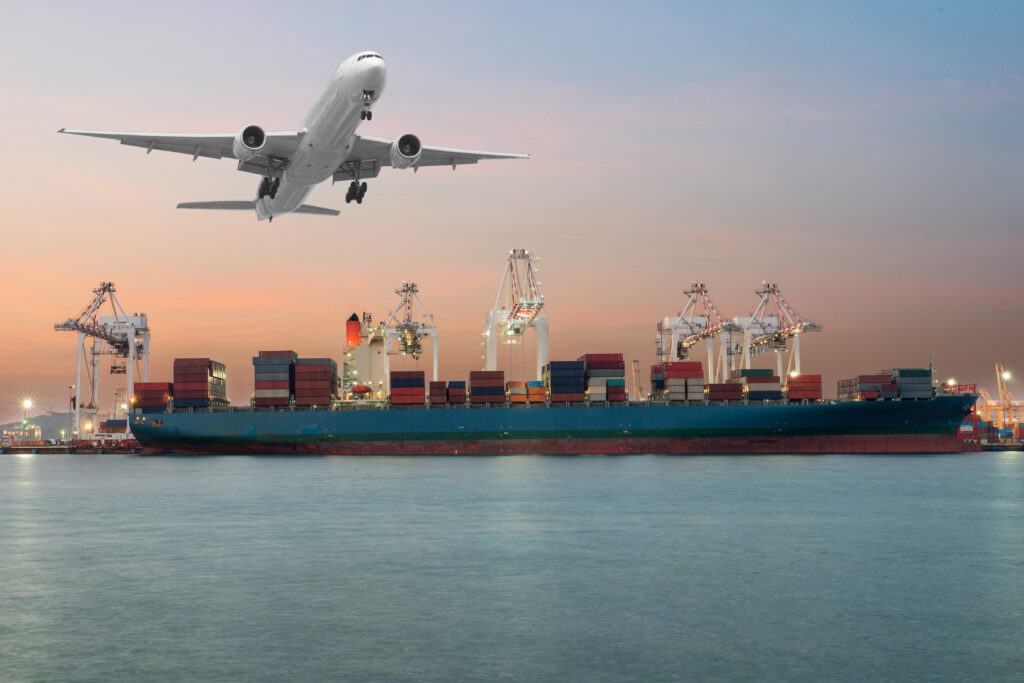
The current geopolitical situation in the Middle East continues to have noticeable effects on international supply chains. In particular, both air and ocean freight operations are affected by restrictions, rerouting measures and short-term operational adjustments.
As the situation may change on an hourly basis, reliable forecasts remain limited at this time. Our teams are closely monitoring developments and are in continuous contact with airlines, shipping lines and international partners in order to minimize operational and financial impacts on ongoing and planned shipments.
In this context, rates and conditions applied by shipping lines, airlines, carriers and other parties involved in the transport chain may be subject to short-term adjustments due to these extraordinary circumstances, which are beyond direct control. Likewise, the execution of shipments already in transit and/or planned transports to or through affected regions may be subject to short-term changes by carriers, airlines or other parties involved, at the risk and expense of the cargo (e.g. non-execution, interruption or premature termination of transport outside the final destination).
Below you will find an overview of the current situation in air freight and ocean freight.
Current Situation in Air Freight
Air freight operations are currently under significant pressure. Airspace closures over parts of the Middle East, together with restrictions at key regional hubs, are leading to noticeable reductions in international air cargo capacity. Several airlines have suspended services or adjusted their flight routings. In order to avoid affected areas, aircraft are often required to take longer routes, which increases fuel requirements and reduces the available cargo capacity per flight.
In addition, important transshipment hubs in the region have at times been operating only partially or were temporarily closed. This has resulted in flight cancellations and delays, particularly affecting routes between Europe, Asia and the Middle East.
Another influencing factor is the current shift in passenger traffic. Due to the suspension of certain airlines, passenger demand is being redirected to other carriers. This leads to significantly higher passenger load factors. As a considerable share of air cargo is transported in the belly capacity of passenger aircraft, the available space for cargo is further reduced.
This development is currently affecting not only specific regions but air freight connections worldwide.
For time-critical supply chains, such as electronics, pharmaceuticals or spare parts logistics, this may lead to extended transit times, reduced capacity availability and short-term adjustments in transport solutions.
Although some airports have partially resumed operations, the situation remains volatile and a full stabilization of air freight operations is not yet foreseeable.
Current Situation in Ocean Freight
The current geopolitical developments are also leading to noticeable changes in global ocean freight operations.
Several shipping lines have temporarily suspended services to directly affected trade lanes or adjusted their operations accordingly. Ports in certain regions are currently being omitted, resulting in adjustments to existing sailing schedules.
In addition, initial indirect effects on global ocean freight flows are already becoming visible. Due to the rerouting of cargo flows as well as tied-up or blocked vessel capacity, capacity constraints may also occur on trade lanes that are not directly affected by the events.
Should the situation persist, these ripple effects are expected to increase further. This may impact available transport capacity, transit times and the overall freight rate structure.
Our teams remain in close contact with the shipping lines and continue to monitor developments closely. Should specific shipments be affected, the respective customers will be informed individually and alternative solutions will be evaluated together where possible.
Possible Congestion Due to Current Conditions and Changes in War Risk Insurance
In addition to the direct impact on transport capacity, further operational challenges may arise due to adjustments in war risk insurance.
Such adjustments not only lead to increased transport costs but may also influence how aircraft and vessels operate in certain regions. In some cases, carriers may be instructed to bypass risk areas, take alternative routes or wait in safe distance before continuing their journey.
These measures may cause shifts or compression in arrival times. When several delayed vessels or aircraft arrive within a short time window, this can create operational pressure on terminals, handling facilities and downstream transport resources, potentially resulting in additional delays or capacity constraints.
Liability Notice
Carrier’s liability insurance and freight forwarder liability insurance generally exclude damages caused by war. In addition, the current war situation may lead to increased insurance premiums, policy cancellations and limited availability of insurance coverage.
According to Clause 12.2 of the German Freight Forwarders’ Standard Terms and Conditions (ADSp 2017), the current situation constitutes an impediment to performance, as acts of war and terrorism fall under such circumstances.
In the event of impediments to performance, the contracting parties are released from their contractual obligations for the duration and extent of the disruption. The required information obligation is hereby fulfilled.
“Impediments to performance that are not within the risk area of either contracting party release the parties from their performance obligations for the duration of the disruption and to the extent of its effects (Clause 12.2 ADSp 2017).
Such impediments include in particular war, war-like events, armed conflicts, terrorist acts, governmental interventions, seizures or blockades of transport routes.
Any liability on our part for damages, losses or delivery delays that are causally related to such events is excluded. Any additional costs resulting from these events (e.g. due to rerouting or storage) shall be borne by the client. We kindly ask you to take note.
We kindly ask for your understanding regarding this exceptional situation and remain at your disposal for any questions.
If you have any questions, please do not hesitate to contact your usual point of contact.
Your Schäfer & SIS Interlogistik® Team